I'm Just Here for the Boos: A Designer's Review
As an embroidery designer who spends countless hours testing digital assets before selling finished products to my own customers, I know that finding the right machine embroidery design is about more than just a cute phrase. It is about stitch density, file stability, and whether the final product will hold up after washing. Recently, I came across the I m Just Here for the Boos design on Creative Fabrica. Before adding it to my commercial collection or using it for a specific client order, I put this piece through a rigorous evaluation process to see if it truly fits the needs of modern handmade businesses.
First Impressions and Visual Personality
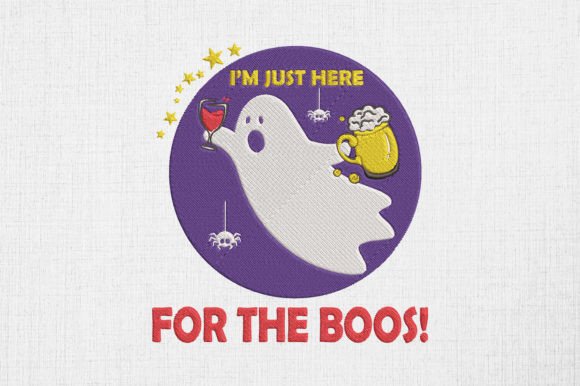
The first thing that strikes you when looking at I m Just Here for the Boos is its immediate seasonal charm. The visual mood is playful yet slightly cheeky, which makes it perfect for those customers who want a Halloween touch without being overly spooky or scary. For designers specializing in custom apparel or nursery decor, this design offers a unique personality that stands out from standard pumpkin motifs.
The lettering style appears to have a strong decorative appeal, likely utilizing a mix of satin stitch for clean edges and fill stitch for body. In my experience, designs that rely too heavily on tiny details often get lost on stretchy fabrics like t-shirts or sweatshirts. However, this particular embroidery file seems to balance readability with artistic flair, making it an excellent candidate for tote bag design projects or embroidered patches where the text needs to be legible from a distance.
Real-World Performance on Custom Apparel
When considering how I m Just Here for the Boos might perform in real production, we must look at the versatility of the application. This design promises to beautifully complement various items, but does it deliver? For custom apparel, such as hoodies and dresses, the stability of the stitches is paramount. If the stitch density is too high, the fabric may pucker; if it is too low, the design may look flat.
I envision this design shining on home decor items like kitchen towels, aprons, and pillow covers. These surfaces are generally stable and provide a great canvas for showcasing the intricate details of the stitching. For sellers listing handmade gifts on Etsy or craft fair products, this design adds a layer of humor that buyers love. It transforms a simple kitchen towel into a conversation starter, increasing the perceived value of the finished product.
However, caution is advised when applying this to curved surfaces like caps. While many digital embroidery files claim compatibility with caps, the curvature can distort letter spacing. If you plan to use this for commercial embroidery on headwear, I strongly recommend creating a test run to ensure the text remains centered and readable.
Navigating Practical Embroidery Challenges
Every experienced crafter knows that the devil is in the details. When evaluating I m Just Here for the Boos, several practical factors come into play regarding small hoop sizes and tiny lettering. If the design includes small serifs or delicate flourishes, they may require a larger hoop to prevent thread breaks or skipped stitches.
- Textured and Stretchy Fabrics: If you are working with textured fleece or highly stretchy jersey, you will need to adjust your stabilizer choice. A cut-away stabilizer is often necessary to maintain the integrity of the design over time, especially for items that will be washed frequently.
- Dark vs. Light Fabric: The contrast of the thread colors is critical. On dark fabrics, a lighter underlay or additional satin columns might be needed to make the white or bright elements pop. Always review the design on both light and dark fabric mockups before committing to a bulk order.
- Dense Stitch Areas: Check the density of the fill areas. High-density fills can sometimes cause the needle to deflect, leading to misalignment. If the design feels too dense for the intended garment weight, consider simplifying the background or adjusting the pull compensation settings in your digitizing software.
Licensing and File Details for Sellers
For those of you running a small business or selling printable mockups alongside physical goods, understanding the licensing terms is non-negotiable. Before downloading any asset from Creative Fabrica, you must confirm the license agreement regarding commercial use. Does the purchase allow you to sell unlimited finished items? Are there restrictions on the number of units?
The product description mentions that this comes with multiple embroidery file formats, which is a significant plus for compatibility. Whether you work with Brother, Janome, Bernina, or Tajima machines, having access to various extensions ensures you aren't stuck waiting for a conversion. However, always inspect the file details on the product page to confirm the maximum recommended hoop size and verify the machine compatibility list.
Impact on Brand Consistency and Customer Trust
In the world of creative entrepreneurs and apparel decorators, consistency is key. Using a high-quality design like I m Just Here for the Boos signals to your customers that you care about the quality of your work. A well-executed embroidered patch or a crisp sweatshirt embroidery project builds buyer trust and encourages repeat business.
This design can significantly enhance your product photography. The playful nature of the text invites creative staging, allowing you to showcase the item in a lifestyle setting that resonates with the Halloween spirit. When customers see a professionally finished item, they are more willing to pay a premium price, viewing it as a genuine personalized gift rather than a mass-produced commodity.
Final Thoughts for the Design Community
If you are looking to expand your design assets for the upcoming season, I m Just Here for the Boos presents a compelling option. Its blend of humor and style makes it versatile enough for baby blankets, nursery decor, and boutique merchandise. However, success lies in the execution.
Before rushing to produce, take these essential steps:
- Test the design on scrap fabric that matches your final material.
- Check the thread color contrast to ensure visibility.
- Review the stitch density and adjust your stabilizer accordingly.
- Confirm the hoop size requirements against your machine capabilities.
- Inspect small details after stitching to catch any potential issues early.
By following these guidelines, you can confidently integrate this design into your workflow. Whether you are creating a one-off personalized gift for a friend or building a catalog of seasonal handmade gifts, ensuring the technical aspects are sound will result in a professional outcome. Ultimately, the best designs are those that not only look good on screen but also stand up to the rigors of real-world wear and tear.